
Bitcoin (BTC) rose toward the key psychological threshold of $40,000, three days after losing the foothold, even as stocks slipped due to concerns over surging oil prices.
As of press time the largest cryptocurrency was changing hands just above $39,000, after dipping below $38,000 earlier in the session.
Brent crude jumped as high as $139 a barrel on Monday, a 14-year high – not too far away from the record $147 reached in 2008.
Europe’s Stoxx 600 and Asia Dow dropped more than 3%, while U.S. S&P 500 futures traded 1.4% lower. In India, the rupee lost 1.1% to trade at a record 76.98 per dollar. Germany’s benchmark DAX Index lost 4% on Monday, entering the dreaded “bear market” territory – a term for when assets lose more than 20% of their value over two months.
The fear in traditional markets is that soaring oil prices might put more upward pressure on inflation, already running at its fastest in four decades, adding to economic challenges that include Russia's invasion of Ukraine and supply-chain bottlenecks.
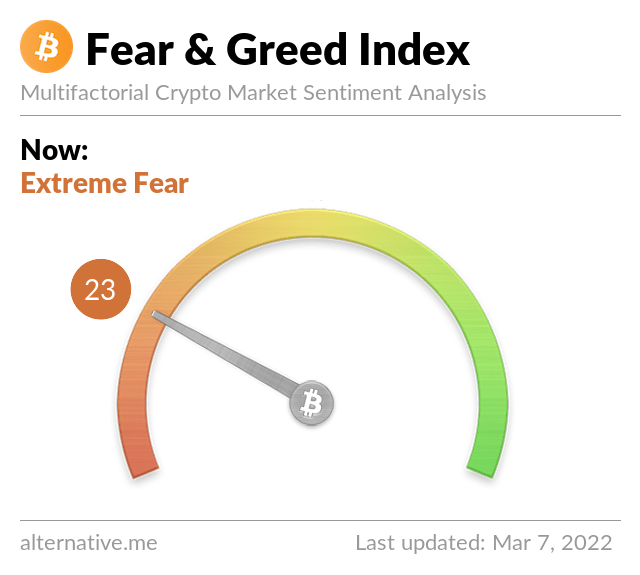
Some analysts say the crypto market’s correlation to broader traditional finance has weakened its narrative as an inflation hedge. On the other hand, bitcoin has reacted negatively to the Federal Reserve's efforts to tamp down the upward pressure on consumer prices.
“Cryptocurrencies do not remain aloof from politics, and they are weakly confirming the role of an alternative to the banking system now,” shared Alex Kuptsikevich, financial analyst at FxPro, in an email to CoinDesk. “With a sharp decline over the weekend, bitcoin wiped out the initial gains, gave away the positions to bears after the third straight week of gains.”
Others say a global recession could materialize if the Fed pushes forward aggressively to boost interest rates.
“Many predict a global recession is on the horizon if the Federal Reserve decides to hike rates aggressively starting from March 16,” wrote Marcus Sotiriou, an analyst at the crypto broker GlobalBlock, in an email.
Sotiriou, however, is among traders who remain bullish on the long-term promise of cryptocurrencies.
“I think that the introduction of regulatory clarity in the U.S., even if it hinders innovation at first, will ignite the next wave of money to enter the crypto markets,” Sotiriou stated. “This is how a $100,000-$500,000 price for bitcoin is achievable over the next five years.”




0 Comments